
About the Department
NPR Arts & Science College introduces a new course, Artificial Intelligence, designed to build expertise in Machine Learning, Deep Learning, and Data Science. With an annual intake of 40 students and guided by a team of 3 experienced faculty members, the program blends academics with real-world applications.
The department is equipped with a dedicated AI Lab featuring high-performance systems, GPU support, and access to cloud platforms for hands-on learning and research. The course aims to prepare students for future careers in AI, Data Analytics, and emerging technologies.
Vision
Mission
- To provide quality education in Artificial Intelligence with a focus on innovation, practical skills, and ethical values
- To promote research, industry collaboration, and entrepreneurial thinking among students
- To prepare responsible AI professionals capable of solving real-world challenges
Scope of the Programme - B.Sc. Artificial Intelligence
The B.Sc. Artificial Intelligence programme offers wide career opportunities in the rapidly growing field of intelligent technologies. The course equips students with knowledge in Machine Learning, Deep Learning, Data Science, Computer Vision, Natural Language Processing, and AI-based applications, preparing them to work in modern technology-driven industries.

Military – DRDO
DRDO is one of India’s most respected institutions responsible for conducting military research and developing defense technologies. The organization works on advanced defense systems and innovations for the country’s armed forces. Individuals interested in joining DRDO should understand the application procedure, eligibility requirements, and selection process before applying.

Space Research
Machine learning and computational intelligence are major research areas in modern space and technology studies. Candidates with a Master’s degree or PhD in mathematics, computer science, or related fields are often preferred for research positions. Research scientists receive competitive salaries, and many organizations actively seek experts with strong experience in artificial intelligence. The importance and demand for researchers are expected to continue increasing in the coming years.

E-commerce
Artificial Intelligence has become a key part of everyday life, especially through smart home assistants. Devices such as the Amazon Echo and Google Home allow users to perform various tasks using voice commands. For example, people can order groceries or control home appliances simply by speaking. These features rely on voice recognition technology, which is powered by AI and machine learning. Artificial intelligence is also helping researchers and companies improve digital services and online shopping experiences.

Private Organizations
Artificial intelligence is expected to be one of the most significant technological transformations in human history. According to Forbes, the world is becoming increasingly technology-driven. By 2030, many tasks may be performed by AI systems and robots. AI is already transforming several industries, including healthcare, transportation, and e-commerce. This powerful technology is bringing major changes and simplifying many aspects of human life.

Banking
Artificial intelligence enables banks to process and analyze massive amounts of data quickly. Technologies such as digital payment systems, AI-based analytics, and biometric fraud detection help banks provide better services to customers. AI includes several related fields such as machine learning, natural language processing, expert systems, visualization, speech recognition, planning, and robotics.

Gaming Industry
Artificial intelligence allows video games to become more interactive and realistic. Non-playable characters (NPCs) can behave intelligently and react to players as if they were controlled by real people. AI has been used in games for decades—from simple behaviors like the paddle movement in Pong or the ghost behavior in Pac-Man, to complex universe-generating algorithms in Elite. As early as 1949, the cryptographer Claude Shannon proposed the idea of a computer playing chess by itself. Gaming has played an important role in the development of artificial intelligence, providing researchers with innovative ways to test and improve AI technologies.

Agriculture
In India, a large portion of the population relies on agriculture as their main source of income. Artificial intelligence helps farmers by predicting crop patterns and analyzing the growth of pests and parasites that affect crops. With these insights, farmers can take preventive measures and manage pests more effectively. Technologies such as thermal imaging cameras also allow farmers to monitor water usage in their fields more accurately. Overall, AI has contributed significantly to improving productivity and development in the agricultural sector.
Programme Outcomes (PO)
- PO1: Disciplinary knowledge: Capable of demonstrating comprehensive knowledge and understanding of one or more disciplines that form a part of an undergraduate Programme of study
- PO2: Communication Skills: Ability to express thoughts and ideas effectively in writing and orally; Communicate with others using appropriate media; confidently share one‘s views and express herself/himself; demonstrate the ability to listen carefully, read and write analytically, and present complex information in a clear and concise manner to different groups.
- PO3: Critical thinking: Capability to apply analytic thought to a body of knowledge; analyse and evaluate evidence, arguments, claims, beliefs on the basis of empirical evidence; identify relevant assumptions or implications; formulate coherent arguments; critically evaluate practices, policies and theories by following scientific approach to knowledge development.
- PO4: Problem solving: Capacity to extrapolate from what one has learned and apply their competencies to solve different kinds of non-familiar problems, rather than replicate curriculum content knowledge; and apply one‘s learning to real life situations.
- PO5: Analytical reasoning: Ability to evaluate the reliability and relevance of evidence; identify logical flaws and holes in the arguments of others;4 analyze and synthesize data from a variety of sources; draw valid conclusions and support them with evidence and examples, and addressing opposing viewpoints.
- PO6: Research-related skills: A sense of inquiry and capability for asking relevant/appropriate questions, problem arising, synthesising and articulating; Ability to recognise cause-and-effect relationships, define problems, formulate hypotheses, test hypotheses, analyse, interpret and draw conclusions from data, establish hypotheses, predict cause-and-effect relationships; ability to plan, execute and report the results of an experiment or investigation
- PO7: Cooperation/Team work: Ability to work effectively and respectfully with diverse teams; facilitate cooperative or coordinated effort on the part of a group, and act together as a group or a team in the interests of a common cause and work efficiently as a member of a team
- PO8: Scientific reasoning: Ability to analyse, interpret and draw conclusions from quantitative/qualitative data; and critically evaluate ideas, evidence and experiences from an open-minded and reasoned perspective.
- PO9: Reflective thinking: Critical sensibility to lived experiences, with self-awareness and reflexivity of both self and society.
- PO10 Information/digital literacy: Capability to use ICT in a variety of learning situations, demonstrate ability to access, evaluate, and use a variety of relevant information sources; and use appropriate software for analysis of data.
- PO 11 Self-directed learning: Ability to work independently, identify appropriate resources required for a project, and manage a project through to completion.
- PO 12 Multicultural competence: Possess knowledge of the values and beliefs of multiple cultures and a global perspective; and capability to effectively engage in a multicultural society and interact respectfully with diverse groups.
- PO 13: Moral and ethical awareness/reasoning: Ability to embrace moral/ethical values in conducting one‘s life, formulate a position/argument about an ethical issue from multiple perspectives, and use ethical practices in all work. Capable of demon starting the ability to identify ethical issues related to one‟ s work, avoid unethical behaviour such as fabrication, falsification or misrepresentation of data or committing plagiarism, not adhering to intellectual property rights; appreciating environmental and sustainability issues; and adopting objective, unbiased and truthful actions in all aspects of work.
- PO 14: Leadership readiness/qualities: Capability for mapping out the tasks of a team or an organization, and setting direction, formulating an inspiring 5 vision, building a team who can help achieve the vision, motivating and inspiring team members to engage with that vision, and using management skills to guide people to the right destination, in a smooth and efficient way.
- PO 15: Lifelong learning: Ability to acquire knowledge and skills, including„learning how to learn‟ , that are necessary for participating in learning activities throughout life, through self-paced and self-directed learning aimed at personal development, meeting economic, social and cultural objectives, and adapting to changing trades and demands of work place through knowledge/skill development/reskilling.
Programme Specific Outcomes (PSO)
- PSO1: To enable students to apply basic microeconomic, macroeconomic and monetary concepts and theories in real life and decision making.
- PSO 2: To sensitize students to various economic issues related to Development, Growth, International Economics, Sustainable Development and Environment.
- PSO 3: To familiarize students to the concepts and theories related to Finance, Investments and Modern Marketing.
- PSO 4: Evaluate various social and economic problems in the society and develop answer to the problems as global citizens.
- PSO 5: Enhance skills of analytical and critical thinking to analyze effectiveness of economic policies..
Activities
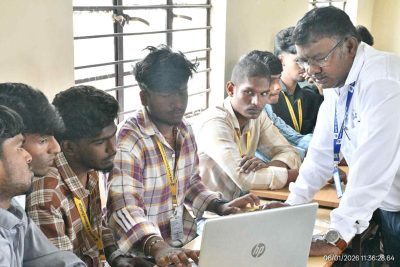
Hands-on Training on UI/UX Design (Figma)
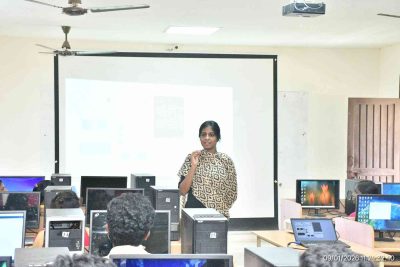
The Computer Science Departments Cluster jointly organizes the Hands-on Training on UI/UX Design (Figma) for their students.
Resource Persons:
Ms. N.M Siva Sneha
Designer/Business
coordinator Hash Infocom, Chennai.
Ms.S.Shvetha
UI & UX Designer,
Koios Studio, Bangalore.
- 09/01/2026
- 11:00 am
- NPRASC Computer Lab 4
- Hands-on Training
Tech Expo By Computer Science Stream
The Department of CS, IT, BCA and AI Jointly organized the Tech Expo for their students.
- 06/01/2026
- 10:30 am
- NPRASC CLASSROOM
- Competition
HR Connect On – Adapting to Change
The Department of CS – Cluster Jointty organized Adapting to Change: Skills that Drive Innovation in Industry for their students.
Resource Persons:
Mr. B. Manikandan,
Chief Operating Officer,
Hitasoft Technology Solutions, Madurai.
Ms. A. Mahalakshmi,
HR Manager,
Hitasoft Technology Solutions, Madurai.
- 29/12/2025
- 10:35 am
- Rabindranath Tagore Hall
- HR Connect
Academic Exchange Programme
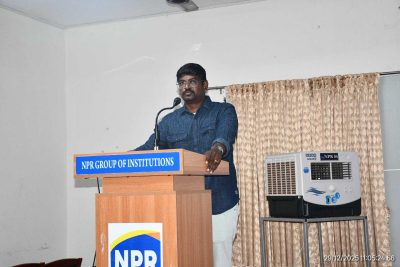
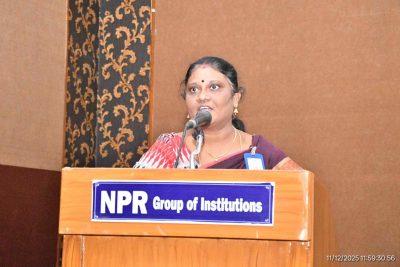
Academic Exchange Programme, a high-energy residency where the brightest minds from partner colleges descend upon our campus. it’s a total takeover of ideas, creativity, and collaboration.
The Project Showdown: Witness a live demonstration of the “Best of the Best” student projects.
Knowledge Drops: Visiting professor and students lead “Flash Seminars, sharing cutting-edge research and alternative perspectives.
It’s a chance to see how other colleges approach the same challenges, participate in collaborative coding exercises, and build an international tech network before you even graduate.
- 11/12/2025
- 9:45 am
- Dr.APJ. Abdul Kalam Hall
- Association Activities
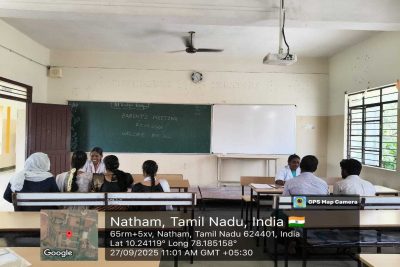
Parent-Teacher Meeting
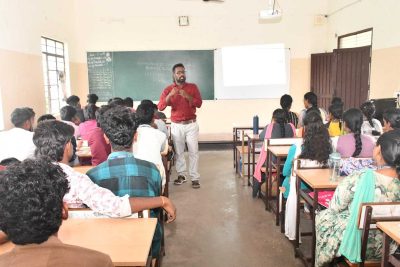
The Department of Artificial Intelligence organized the Parent-Teacher Meeting for their students.
- 27/09/2025
- 9:30 am
- NPRASC CLASSROOM
- Parents Teacher Meeting
The Future of Al: Opportunities and Ethical Challenges
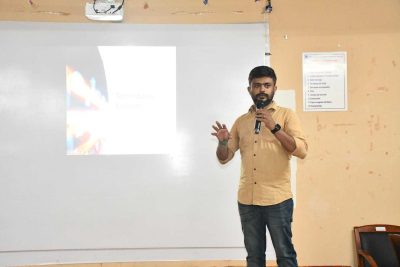
The Departments of CS(AI), CS, IT & BCA Jointly Organized The Future of Al: Opportunities and Ethical Challenges for their students.
Resource Person
Mr. Naresh Kumar Ezhil Kannan,
Engineering Manager
Altimetrik, Chennai.
Mr. Dineshkumar Raja
Technical Lead
Thoughtworks Technologies Private Limited
Coimbatore.
- 18/09/2025
- 10:45 am
- Swami Vivekanandar Hall
- HR Connect
One Day Workshop on Python
The Department of Computer Science & Artificial Intelligence Jointly Organized a One Day Workshop on Python for their students.
Resource Person
Mr. B. Kaleeswaran
Senior Full Stack Developer
Marqwon Private Limited,
Madurai.
- 17/09/2025
- 10:45 am
- NPRASC LAB & CLASSROOM
- Workshop
Quiz Competition
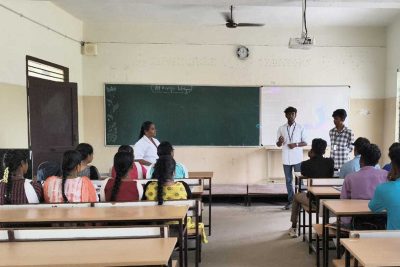
The Department of AI organized the Quiz Competition for their students.
- 17/09/2025
- 10:00 am
- NPRASC CLASSROOMS
- Competition
Paper Presentation
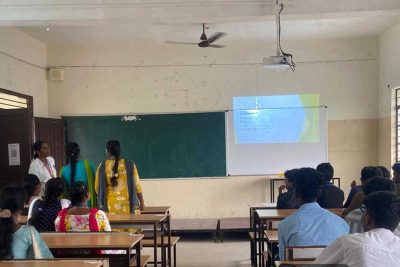
The Department of AI organized the Paper Presentation for their students.
- 17/09/2025
- 1:10 pm
- NPRASC CLASSROOMS
- Competition
HR Connect on Impact of Artificial Intelligence in the Workplace
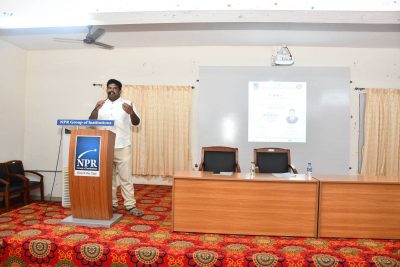
The Departments of CS, BCA, IT & AI jointly organized a HR Connect on Impact of Artificial Intelligence in the Workplace for their students.
Resource Person:
Mr. R. Ashwin
B.Sc – IT (2019–2022 Batch)
HR Executive
Radisson Blu Hotel,
Chennai.
- 14/08/2025
- 1:30 pm
- Rani Velu Nachiyar Hall
- HR Connect
Exploring MongoDB – Hands on Training & MOU Signing with Xplocode
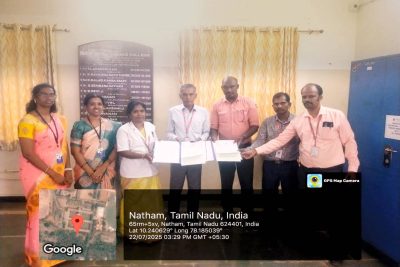
The Departments of CS, IT, BCA, and AI jointly organized a Hands-on Training on “Exploring MongoDB” and an MoU Signing with Xplocode for their students
Resource Person:
Mr. Muthu Kumar,
Manager,
Xplocode Infotech Private Ltd,
Madurai.
Mrs. G. Mahima,
Xplocode Infotech Private Ltd,
Madurai.
Mrs. V. Ponmalar,
Xplocode Infotech Private Ltd,
Madurai.
- 22/07/2025
- 11:00 am
- NPRASC Computer Lab 4&5
- Hands-on Training
Fresher’s Day – 2k25
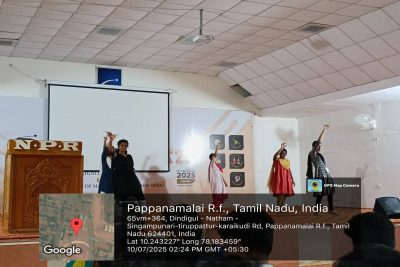
The Science stream organized a Fresher’s Day celebration for its students.
- 10/07/2025
- 2:00 pm
- Thiruvalluvar Hall
- Freshers Day
Eligibility
- A Candidate should have studied +2 level Mathematics in the 10 + 2 stream.
- The students shall undergo the prescribed course of study for a period of not less than three academic years (Six semesters).
- A Candidate shall be eligible for the award of the degree on completion of the prescribed course of study and passing all the prescribed external examinations.
- Attendance progress, internal examinations, and conduct certificate from the Head of the Institution shall be required for taking the external examination.
- The passing minimum and the ranking are as per the existing rule of the Choice Based Credit System for the affiliated college of the University.
Course Details
- Course Duration: 3 Years
- Study Mode: Full Time
- Course Level: B.Sc – Bachelor of Science
- Medium of Instruction: English
Syllabus
Faculty

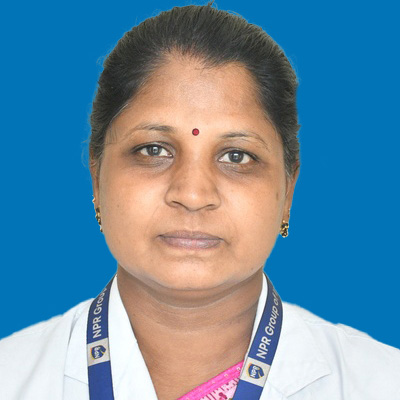
Mrs.C.MEENA
HOD

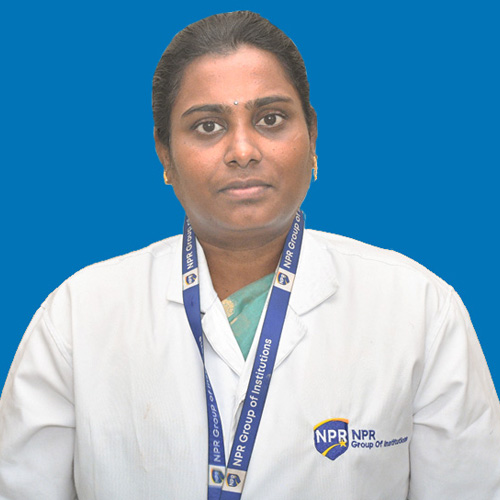
C.Jaya Sudha
Assistant Professor
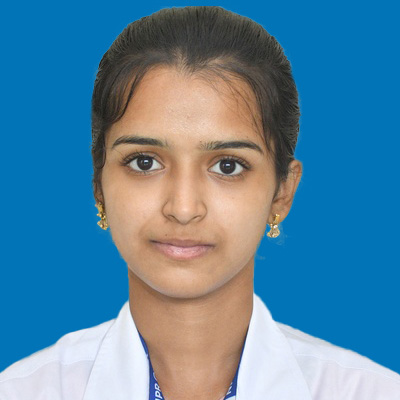
G.Uma Maheswari
English